New Research: What 6,000 clinicians and patients across Europe say about admin burden and AI in healthcare
By
Tandem Health
·
·
Research
Europe’s clinicians are losing time to admin
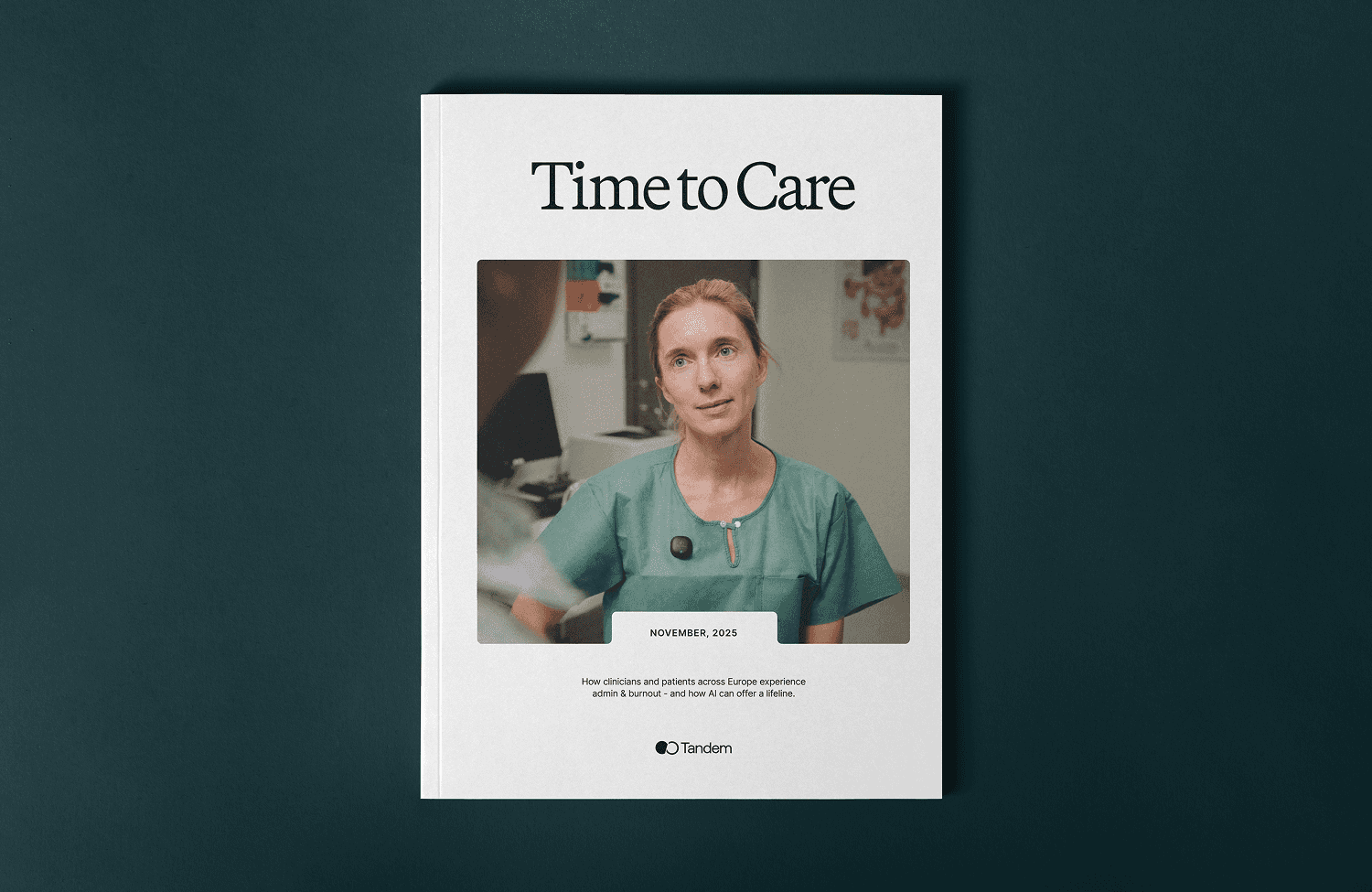
Across Europe, clinicians and patients are saying the same thing. Admin is taking over the clinical day, and the loss is felt in shorter conversations, missing context and rushed decisions. The Time to Care report brings together the views of more than 1,000 clinicians and over 5,000 adult patients across the United Kingdom, France, Germany, Spain and Sweden. The picture that emerges is clear. Clinicians want to focus on people, not paperwork. Patients want attention, accuracy and trust. Both are being pushed to the edge by growing administrative demands.
Most clinicians now spend hours each day on admin
Documentation has gone from being a background task to becoming a major part of the workday.
• 65% of clinicians spend more than one hour a day on admin
• Almost 1 in 5 spend more than two hours
• 4 in 5 say this reduces time with patients
• More than half say it harms the quality of their interactions
This is not a small shift. In Germany and the United Kingdom, stress linked to admin is especially high. Sixty two percent of German clinicians say admin increases workplace stress, and fifty four percent say the same in the United Kingdom. Around a third in both countries now report burnout symptoms tied to the workload.
Paperwork is becoming a second shift outside clinic hours
Admin has grown into a second shift that reaches beyond clinic hours. Evenings and weekends are now part of the documentation cycle for many clinicians.
Across the five surveyed countries:
• 73% say administration takes too much time
• More than half say it harms the patient conversation
A workforce study in Sweden shows how this plays out. Clinicians reported more than five hours of unpaid overtime each week on documentation. Many also linked this to fatigue, sleep issues and thoughts of leaving practice.
Patients feel the impact in every interaction
The consequences show up in the consultation room. Patients notice when attention is split between the computer and the conversation.
They also notice when records are incomplete or wrong.
• 70% say their doctor divided attention between the screen and the discussion
• Only 1 in 4 felt they had their doctor’s full focus
Record accuracy is another pressure point.
• 1 in 4 patients have found mistakes in their medical records
• 1 in 7 say those mistakes affected their treatment
• Almost all (97%) believe clinicians should spend less time on admin and more time with them
Patients lose confidence when attention slips. They want a quiet, focused conversation, not a visit shaped by the screen.
Clinicians and patients both see AI as a way out
Clinicians and patients both see AI as a practical way to reduce the load of documentation. Their expectations are grounded in everyday needs: more time, less stress and better clarity in the record.
Among clinicians:
• 85% believe AI documentation tools would help their work
• 86% expect AI transcription to become standard within five years
• Top benefits include saved time, reduced stress and higher accuracy
Among patients:
• 83% are comfortable seeing doctors who use AI tools when privacy is protected
• Around 60% think AI could give clinicians more time for conversation
• About half believe it could reduce errors
Admin now consumes too much of the clinical day, and both clinicians and patients feel the cost. The findings across Europe point to the same need. Give clinicians tools that ease documentation, respect privacy and support the way they already work. When AI tools are simple, secure and shaped around clinical judgment, they help return time to care.
→ Download the full report here
Tandem’s AI medical assistant was built for this exact problem. It listens quietly in the background, drafts the clinical notes and transfers them into the record with one click. No setup, no training. Just more time for the patient and less time on paperwork.


